Taskbar Hero Wiki Stages & Drops

Stage Routes & Drop Judgments

Stages & Drops

This page keeps stage names, route codes, and drop contexts in a guide-first reading flow. The goal is not to dump 120 stages on you at once, but to answer a simpler question first: should you push, farm chests, farm gold, or prepare for bosses right now?

Code-style routes like `1101 / 1204 / 1307 / 3309 / 4307` are still useful shorthand. This page keeps both the code and the map name so each route can be judged by what it is actually good for.

Build your stage judgment by Act and difficulty tier first

The real value of a stage page is not listing map names forever. It is helping players understand what each phase should be used for. First decide whether you are in Act 1, Act 2, or Act 3, then decide whether you should keep pushing, stop and farm, or treat the map like a pre-boss stress test.

3 Acts / 4 difficulties / 120 stages
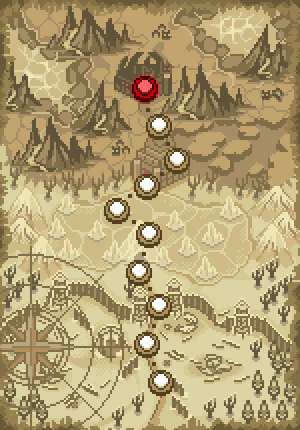
Act 1 overview background Act 1
Starter 1101 / 1108 / 1110

From Pasture to Cemetery, establish the ability to clear first

Act 1 is not about chasing maximum return. It is about building the most basic clear rhythm. If 1101 and 1108 are still unstable, the account is not ready to pivot into a full farming route yet.

  • Make sure the front line and main carry can stay alive consistently.
  • Start runes with EXP, damage, and armor baseline lines.
  • Take gold and chests only when they do not slow progression down.
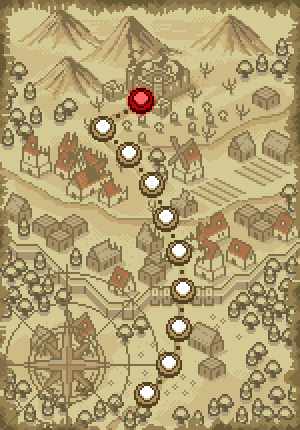
Act 2 overview background Act 2
Material Chest

Act 2 is where routes split and materials must be separated from chests

From Bug Nest to Sacred Tomb, this is the phase where players most often assume every map is worth farming. In reality, what matters more is deciding whether you are short on materials, gold, or pure progression power.

  • 1204 is more of a transition supply stop than a long-term home map.
  • Chest routes like 1208 should only start once clears are stable.
  • High-pressure nodes like 1210 are better for deciding whether a boss setup is needed.
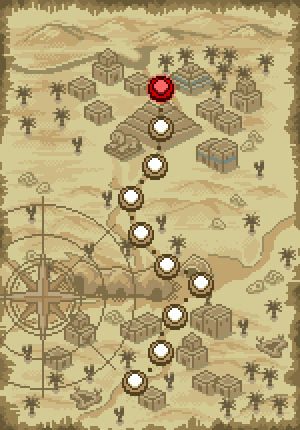
Act 3 overview background Act 3
Gold Boss

Act 3 is more of an account checkup than a simple late-farm recommendation

Plains of Torment can appear from 1307 all the way to 4307, but those codes do not belong to the same account phase. The deeper you go, the more stage reading becomes a maturity check instead of a simple farm suggestion.

  • Use 1301 first to check whether you can enter Act 3 smoothly.
  • 1307 is good for building later-game farm judgment.
  • 3309 / 4307 behave more like endgame benchmarks and maturity checks.
Difficulty icon Difficulty tab highlight Stage node icon Boss reward icon
Normal Nightmare Hell Torment

When reading route codes, do not stop at the map name

Codes like 1101, 2307, 3309, and 4307 tell you much more than the map name alone. They hint at whether the map is a progression stop, a profit stop, or a maturity test, and the same map name can mean something very different across difficulty bands.

  • Use the first two digits to read the difficulty layer.
  • Use the last two digits to confirm where the node sits in that Act.
  • Do not carry old farming conclusions forward when the same map name appears in a higher Tier.

Good stage reading starts when map codes stop pretending to mean the same thing

Stage codes are useful shorthand, but they are not the real decision. The real decision is whether a route currently serves progression, stable farming, chest value, material refill, or a boss-pressure check.

Purpose Split / Validation Maps / Route Maturity
Stage icon
The same-looking route code can belong to very different account phases depending on pressure and clear stability.
Gold icon
Gold maps should be read through repeatable value, not just highest chapter number.
Boss chest icon
Chest and boss routes deserve separate judgment because they punish instability differently.
Map Judgment

Routes become much clearer when you split purpose before you split stage numbers

Community beginner advice, pet-farming tips, and the official system list all indirectly reinforce the same thing: old maps, portal loops, and stable fallback routes are part of smart play, not signs that you failed to keep pushing.

  • Act 1 maps teach whether the account can keep a baseline loop alive at all.
  • Act 2 maps are where material, chest, and transition choices start to diverge and need cleaner separation.
  • Act 3 routes behave more like account maturity checks, especially once Torment-stage labels enter the conversation.
A lower map you can run for a long time is often a better data point than a later map that only proves the account can fail there repeatedly.
01

Validation maps are part of progression, not a retreat

After changing heroes, runes, pets, or Cube work, older stable maps are the cheapest place to judge whether the route actually became better.

Blue portal Old-map checks Lower-cost testing
02

Chest routes should not be blended into every farm discussion

Chest value only matters when the route can already carry the extra pressure and time cost without collapsing the session.

Chest value Pressure cost Session stability
03

Torment labels are closer to account benchmarks than generic farm tips

Later route codes only become useful recommendations once the account has enough survival, loop quality, and fallback logic to survive them consistently.

Torment Benchmark maps Account maturity

Decide first whether you want progression, profit, chests, or bosses

Stage pages are easy to turn into a long list of map names, but most users only want four answers: should they keep pushing, farm gold, farm chests, or start preparing for bosses? Separate the goal first, then judge the actual map.

Goal-first stage reading
01

I am still pushing chapters

If your progression rhythm itself is unstable, pick maps you can simply clear first. Do not get baited too early by Gold or chest value.

  • Start with each Act's baseline progression checkpoints.
  • Let Builds and Runes serve map stability first.
  • Drop value comes after the ability to clear.
View progression routes
02

I want better gold or material returns

The useful move here is not picking random maps, but deciding first whether you are actually at a phase where stopping to farm makes sense.

  • Look at Gold / Material routes first, not boss routes.
  • Farm routes should always be judged alongside Gear and Rune state.
  • Blind progression is often worse than stable farming.
View the yield matrix
03

I want chests or one specific drop target

Chest routes make more sense only after you already have stable output. Confirm clear rhythm first, then judge chest value.

  • Normal Chest and Boss Chest routes should be read separately.
  • The drop lookup tool fits well alongside this page.
  • Unstable teams should not force chest routes.
Compare chests and gold
04

I want to prepare for high-pressure maps or bosses

Boss nodes ask you to organize Builds, Gear, and Runes in advance. The stage is the final exam, not the place where every problem gets solved.

  • First confirm whether a boss-focused setup is actually needed.
  • Then use the high-pressure route checkpoints on this page.
  • If it is still rough, returning to Cube and Gear is usually more efficient.
Check boss builds first

Yield matrix: how to separate gold, chests, materials, and continued progression

Many players blend gold farming, chest farming, material farming, and continued progression into one vague 'farm' idea. This section puts them side by side so your goal and route choice are clear before you even open a route card.

Push / Gold / Chest / Material

Stage route library

This section starts with 12 representative routes, keeps the code and map name together, and adds the more useful question: what is this stage actually good for?

Code + Act + Tier + Best Use
Act
Tier band
Focus

Showing 0 stage routes

Act 2 route background

Pick routes by goal

This section is not ordered by chapter, but by player goal: progression, gold, chests, or bosses. That is much closer to how real guide readers use stage pages, and it is the content most players actually revisit.

Push / Gold / Chest / Boss

Encounter and terrain context

Many route decisions are not really about the map name, but about what kinds of enemies and pressure that map usually brings. So this is not a monster encyclopedia, but a quick reading layer for what that encounter type normally means for your farming experience.

Swarm / Range / Tank / Boss