Taskbar Hero Wiki Runes Database

Rune Planner & Atlas

Runes Database

This page expands the homepage rune tree ideas into a fuller planner and atlas. It is organized around route judgment first, then icon groups and lane comparisons.

The current page organizes rune icons, categories, and progression directions into five working groups: combat, economy, chest, offline, and utility. It can expand further without breaking the route-first reading flow.

Decide first which kind of growth you are actually missing

The easiest way to misbuild runes is to treat every node as something that will 'eventually be useful.' A better approach is to decide whether you are currently missing survival, efficiency, boss killing, or offline recovery.

Need-first reading
01

I am still in the starter phase and want stable progression first

Do not touch too many fancy routes at the start. Build EXP, baseline damage, and armor first, then look at skill slots and utility picks.

  • Prioritize Additional Exp and baseline attack lines.
  • All Hero Armor fits safe-push setups better.
  • Take enough skill slots to function; do not rush to max them.
Jump to Starter Lane
02

I can already farm and want better value

This is the phase where players most often spread points too thin. A better method is to connect Gold, Chest, and speed nodes into one route instead of leveling every value node evenly.

  • Start with Additional Gold and chest lines.
  • Attack Speed becomes high priority only when the setup actually supports it.
  • Works best when paired with the Farming Optimizer.
Jump to Farm Lane
03

I am stuck on elites or bosses

Boss-related nodes are not something you default into for everyday play. First decide whether the wall is survivability, damage, or rhythm, then add Attack %, Armor %, or boss chest lines.

  • Confirm first that the build really has moved into a boss setup.
  • Attack % and Armor % are pressure-map support nodes.
  • Wave-count and boss-chest lines are later efficiency layers.
Check boss routes first
04

I mostly rely on idle and offline accumulation

If your play rhythm is already offline-heavy, do not use online speed-farm routes as the standard. Close the offline reward loop first, then return to comfort and efficiency.

  • Unlock Offline Reward first.
  • Offline Gold and Exp are steadier than extreme burst routes.
  • Add stash or chest comfort nodes later.
Jump to Offline Lane

Rune strength comes from concentration, not from touching every good-looking node

Players usually lose more value by mixing too many half-built lanes than by choosing the wrong single rune. This page now leans harder into the idea that a rune plan should serve one route at a time.

Concentrated Lanes / Route Identity / Recovery Logic
Additional EXP rune icon
Starter accounts gain more from a clean EXP-and-baseline lane than from splitting greed and utility too early.
Additional Gold rune icon
Value runes pay off hardest after the clear rhythm is already stable.
Offline reward rune icon
Offline and comfort nodes deserve their own lane instead of being judged against boss pressure.
Lane Discipline

Pick the growth problem first, then let the rune tree stay narrow for a while

The rune tree only becomes clear when you stop asking whether each node is "good" in the abstract and start asking what your account actually needs more right now: safer clearing, better return per run, cleaner boss pressure, or stronger offline recovery.

  • Starter lanes want EXP, baseline damage, and enough armor to keep the route from wobbling.
  • Farm lanes want gold, chest value, and speed nodes that reinforce a route already proven to be stable.
  • Offline lanes should be judged by comfort and recovery, not by whether they win a live boss test.
If a rune route feels weak, check whether the lane is diluted before assuming the individual nodes are wrong. Most accounts improve faster by concentrating points than by broadening them.
01

Greed runes need a stable map underneath them

`Additional Gold`, chest drops, and speed lines become much easier to evaluate once the same map can already be cleared for a long time without manual rescue.

Stable clear first Gold lane Chest lane
02

Boss lanes should stay rare and deliberate

Attack %, armor %, and pressure-map nodes are strong, but only when the account is clearly solving a wall instead of doing ordinary farming.

Boss check Pressure maps Deliberate swap
03

Utility nodes are best used to smooth a plan, not replace one

Skill slots, stash pages, offline unlocks, and comfort nodes matter most after the account already knows what its main route is trying to optimize.

Utility Comfort Plan support

Rune search and category browsing

This section is designed to answer two practical questions first: which type of rune should I level first, and who is this node best for? Filter by category, then by lane, then by hero focus instead of mixing the entire rune pool together.

Search + Category + Lane + Hero Focus
Category
Lane
Hero focus

Showing 0 rune nodes

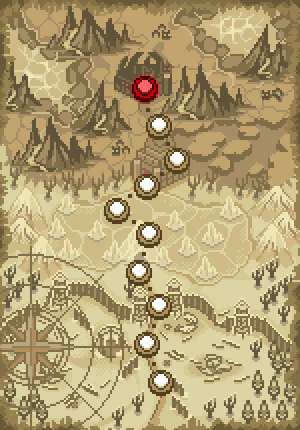
Act 3 environment art

Recommended rune lanes

This section extends the homepage idea of the rune planner. Instead of drawing every node into a tree first, it uses lane cards to answer the four questions players ask most: what to level first for starter play, what to level for farming, what to add before bosses, and when offline or utility nodes start to matter.

Starter / Farm / Boss / Offline

Rune icon overview

The different rune icon groups are placed together here so players can build quick visual memory for what each category actually does. When the full database arrives, this area can expand into a paginated categorized icon atlas.

Icon atlas + short meaning

Best next data layers to add later

The current `Runes` page solves presentation and filtering first. To turn it into a mature database, the next additions should center on node relationships, unlock costs, and hero-build linkages.

Next data layers

Node Graph

Add the full tree structure and prerequisite graph.

  • Prerequisite nodes and branch directions for every rune.
  • Unlock cost, cumulative investment, and rollback cost.
  • Where starter and endgame routes overlap on the same tree.

Build Pairing

Add hero and build pairing notes.

  • High-frequency priority nodes for Ranger / Sorcerer / Knight.
  • How speed-farm, boss, and three-hero routes differ at the starting point.
  • Cross-links into Gear, Cube, and Builds.

Progression Math

Connect the numbers to the strategy.

  • Single-point value versus marginal value comparisons.
  • Efficiency comparisons across offline, chest, gold, and EXP nodes.
  • How farming priorities shift across different chapter bands.